Video Chat
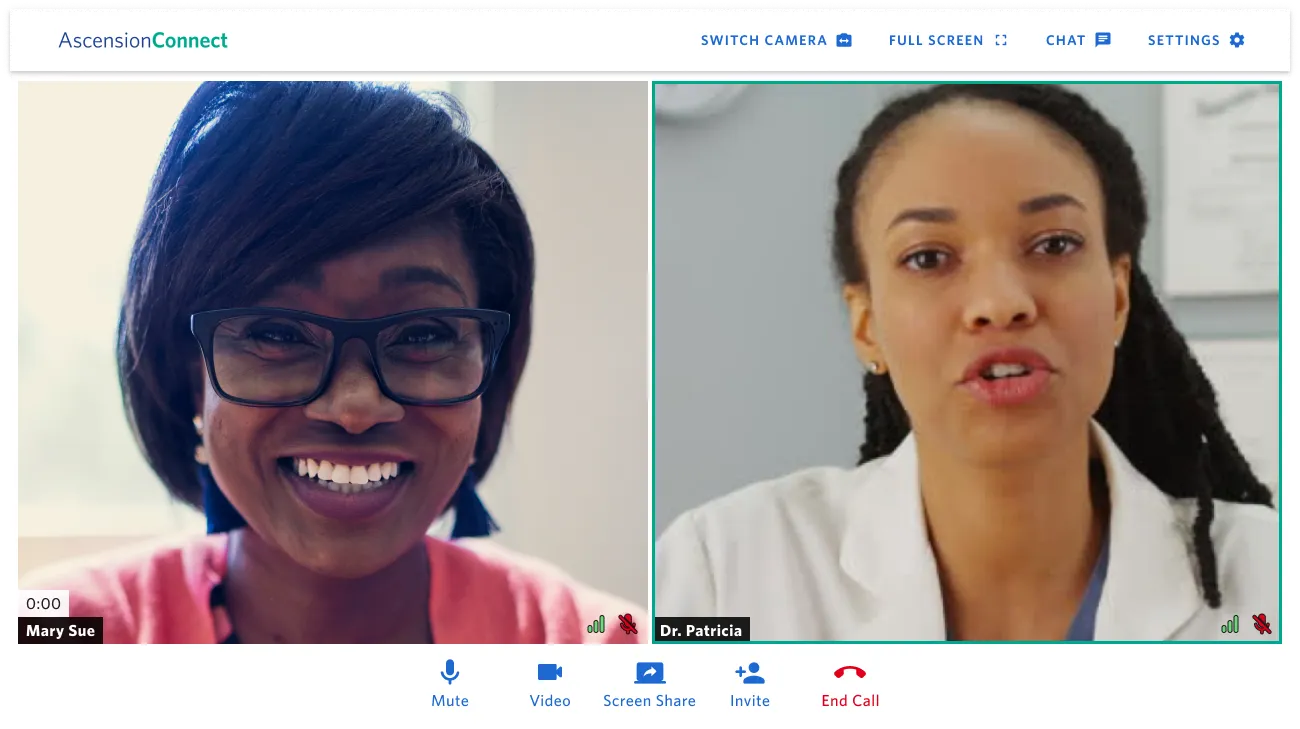
Clinicians live in the EHR so we met them there. Adoption rose from 46 to 55%.
- Role
- Designer
- Team
- Researchers, product and engineering
- Outcome
- Adoption against other telehealth tools rose from 46% to 55%
Office-based physicians’ use of telemedicine went from 15.4% in 2019 to 85.9% in 2021 (CDC). During COVID, Ascension built its own lightweight, HIPAA-compliant video chat app. Offices could create rooms and send out links, and providers and patients hopped into a call together.
I was the designer on the next version, working with researchers, product and engineering in Ascension’s Helix design system. We worked with one of our clinics in Jacksonville to help clinical staff create, manage and complete their telehealth visits.
By August 2023, Video Chat had hosted 1,090,072 visits across the system, with a 4.79 average rating out of 5. Adoption against other telehealth tools rose from 46% to 55% in the quarter before that.
What staff told us
Clinical staff were the primary users. They create the appointments and handle the messages to patients. They talk to providers over athena chat, and providers don’t sign in to Video Chat at all; they join with a link. Staff wanted to tell upcoming visits from cancelled ones, send each provider their own link, and send patients messages without typing them out every time.
We mapped their journey with the clinic, drew service blueprints of who does what and where the data goes, and looked hard at the version already in production. Then we collected their “wants” in conversation, affinity-mapped them, and turned them into user stories, alongside ideas from workshops with our stakeholders.
Four decisions
Keep it light
People loved how lightweight Video Chat was, and we didn’t want to lose that. We cut the clicks to the screens staff use most, and added real-time feedback, like when a participant joins or a link fails to send.
Urgency over origin
The old chips said where an appointment came from, Video Chat or athena. Ours say how urgent it is: Now, Upcoming, Cancelled. Staff can see a provider’s day at a glance and get straight to joining, cancelling, adding participants, sharing links and messaging. Cancelled visits tuck away, but open back up so staff can reschedule them in downtime.
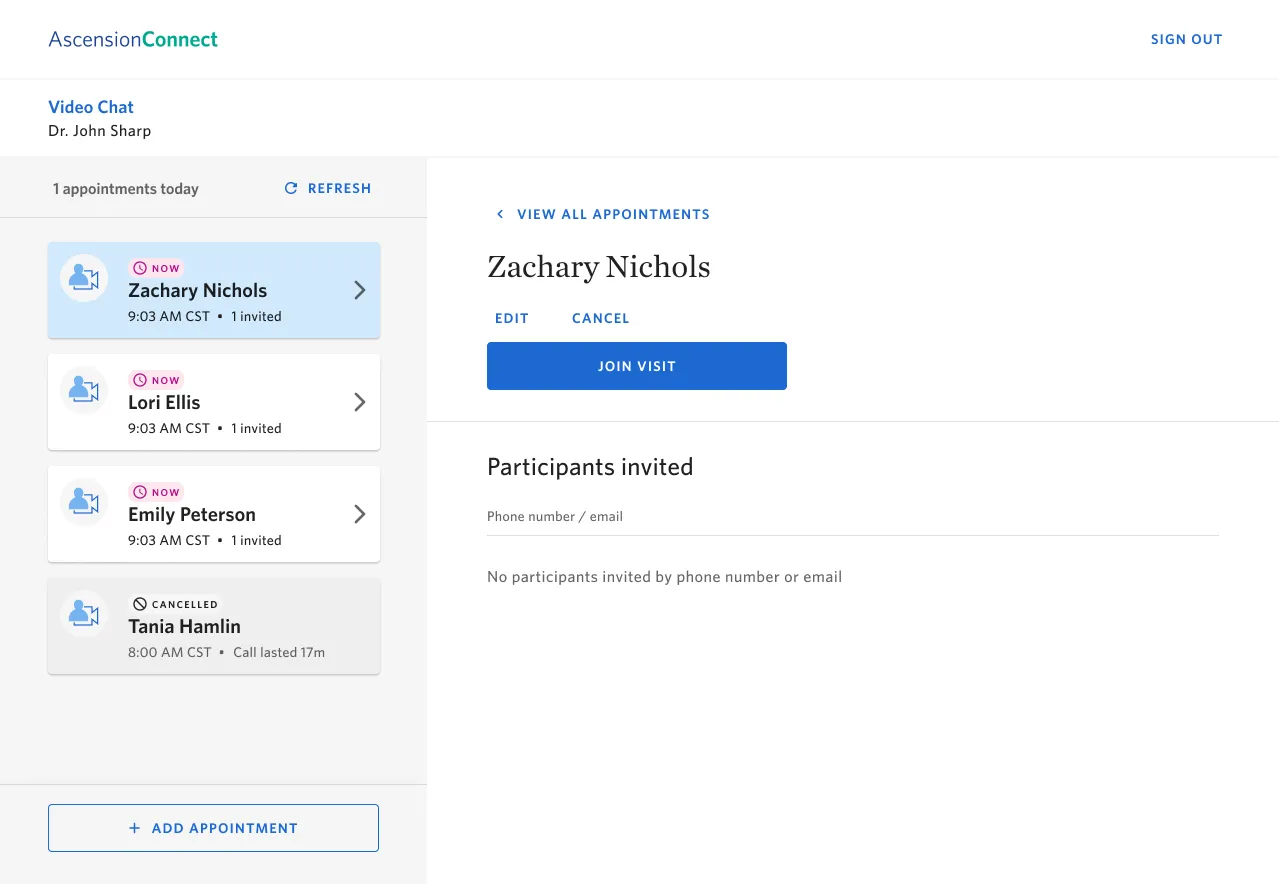
Appointments sorted by urgency, with Now at the top.
A link for every provider
Before, everyone shared one link into a call. Providers joined from email or athena chat, so we could only guess whether they’d actually been there. We gave each provider a unique link tied to their email, so reporting stopped guessing. That mattered more as medical assistants, nurses and interpreters started joining calls too.
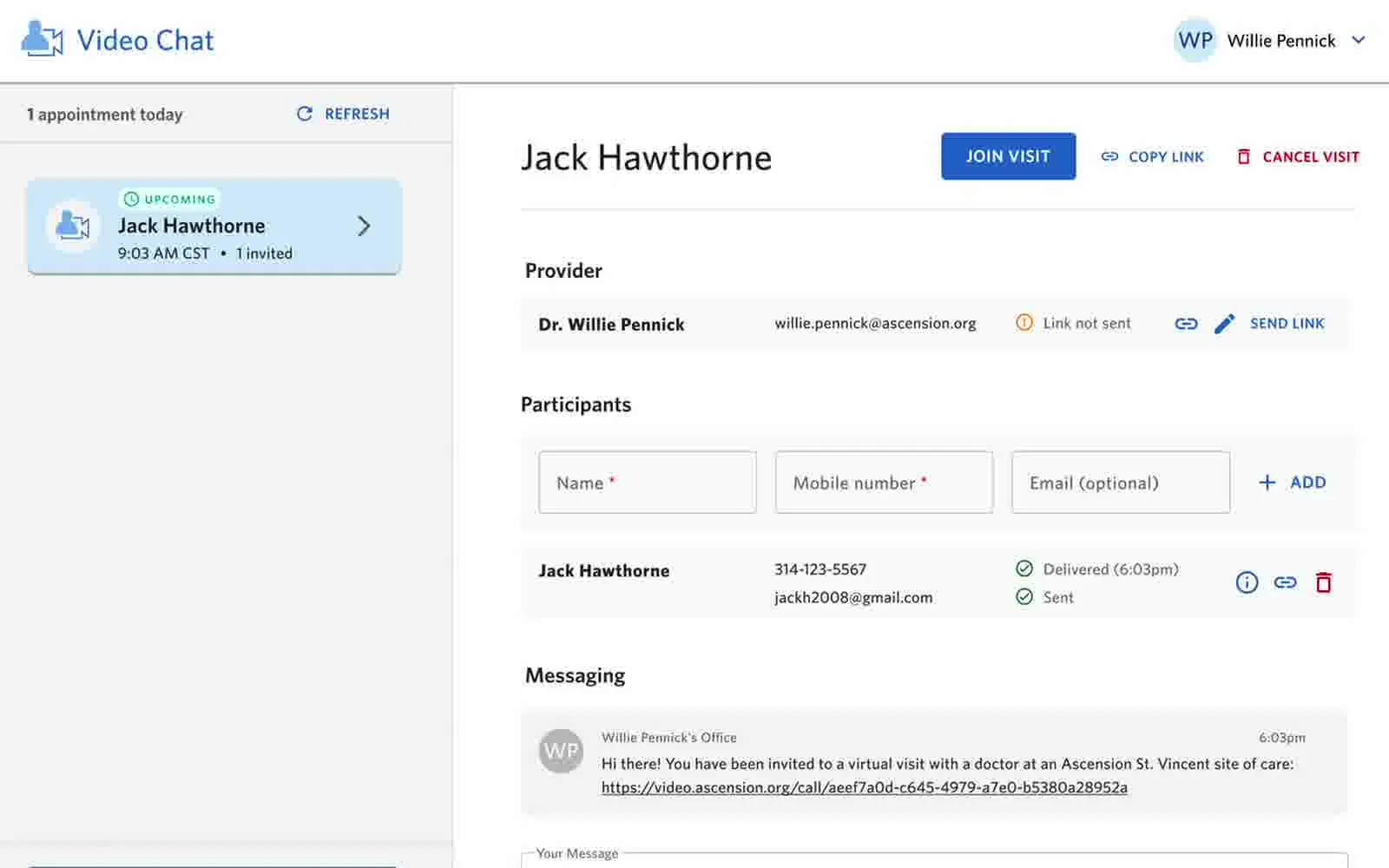
Each provider gets their own link, sent from inside the visit.
Templates from a sticky note
Staff liked to personalize messages to patients but didn’t have time to type them out. One of them kept templated messages on sticky notes to copy and paste into the app. We built those templates in.
What changed
Video Chat hosted over a million visits, and it mattered most during the COVID years. In 2024, it was retired in favor of the telehealth built into the EHRs the system already used.
What I’d do differently
The biggest complaint about Video Chat was that it lived outside the EHR. We pulled it closer, with links staff could drop into athena chat, but it was still a separate app. If I did it again, I’d push to build it inside the EHR from the start.